

.png)
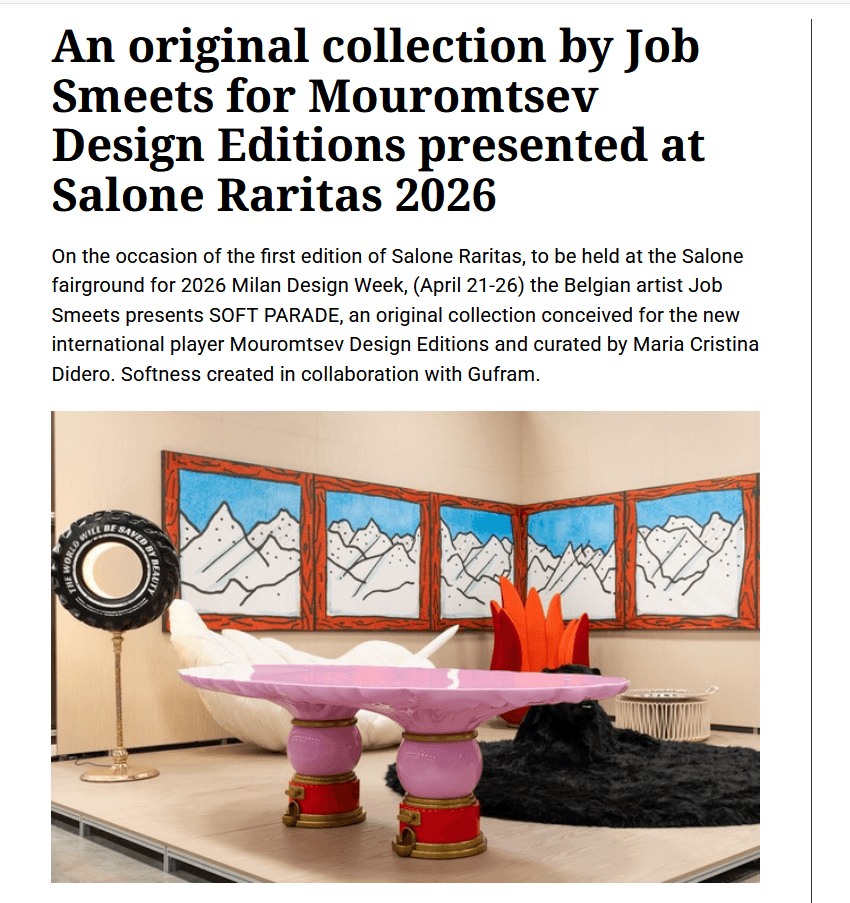
SOFT PARADE
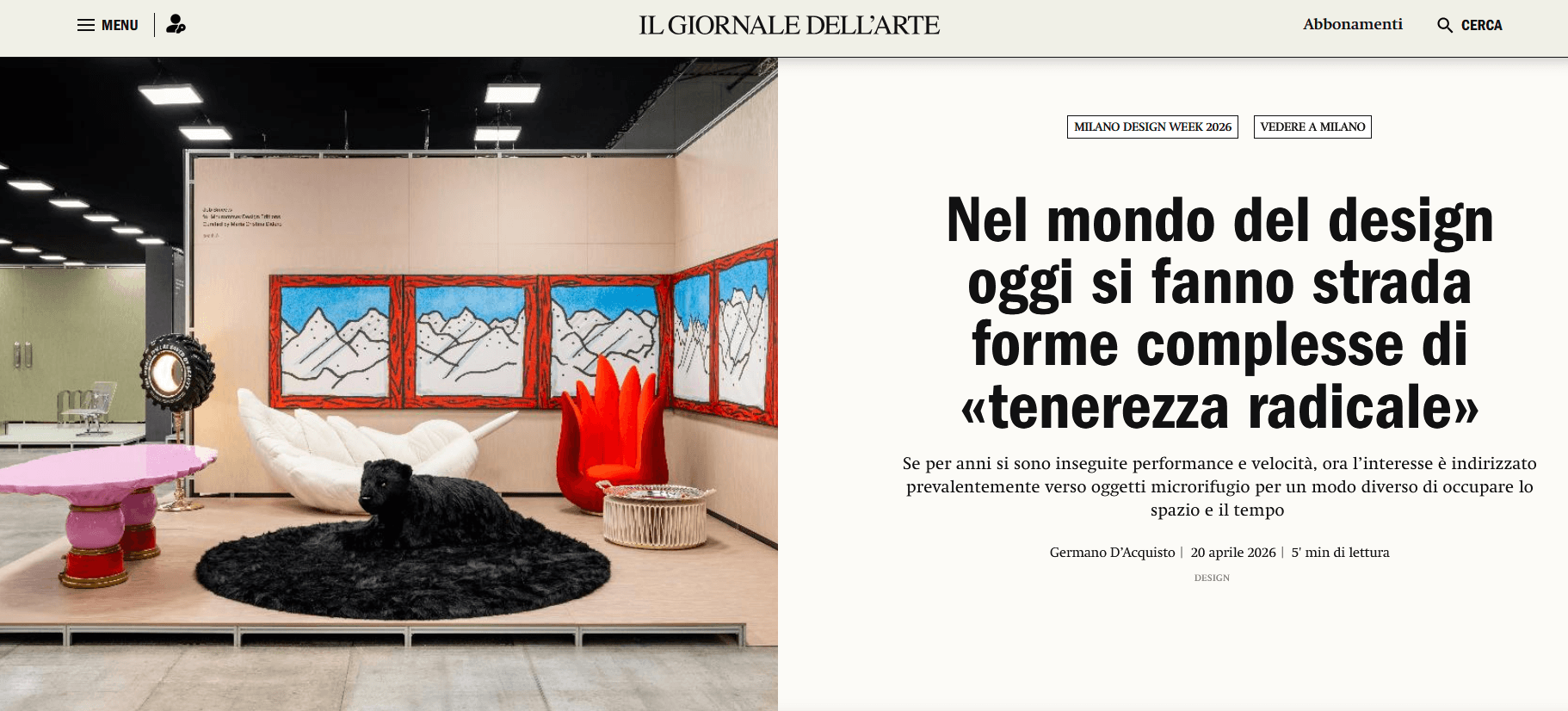
What does it mean to be tender in difficult times? The collection SOFT PARADE takes this question as its starting point, approaching softness not as comfort, but as a considered stance. Tenderness, humour, and contradiction coexist with uncertainty and pressure. Irony is central to the project, functioning as a method for holding tension without resolving it.
These concerns have long informed Job Smeets’practice, shaping a body of work defined by conviction, play, and precise construction. In this context, softness is a way of thinking and making that allows opposing qualities - lightness and weight, fragility and strength - to meet without collapsing into sentiment.
Job Smeets’s interpretation of softness moves away from reassurance and toward contrast.
Forms are softened only to reveal tension; familiar images, remind to personal memories, are reworked to create short-circuits between expectation and use. Humor runs throughout the collection operating as a structural element rather than a surface effect.
Through this lens, the narrative expedient “softness” becomes a form of intelligence: attentive to vulnerability, resistant to aggression, and capable of accommodating instability. Here it comes irony, which offers a way of engaging with the present without denial or force.
In the collection SOFT PARADE memory, material, and form are held in productive opposition, allowing meaning to emerge through contradiction and different layers of meanings. The resulting body of work reflects contemporary fragility with its many emotions, while affirming the continued relevance of imagination.
TYPOLOGY OF THE PIECES
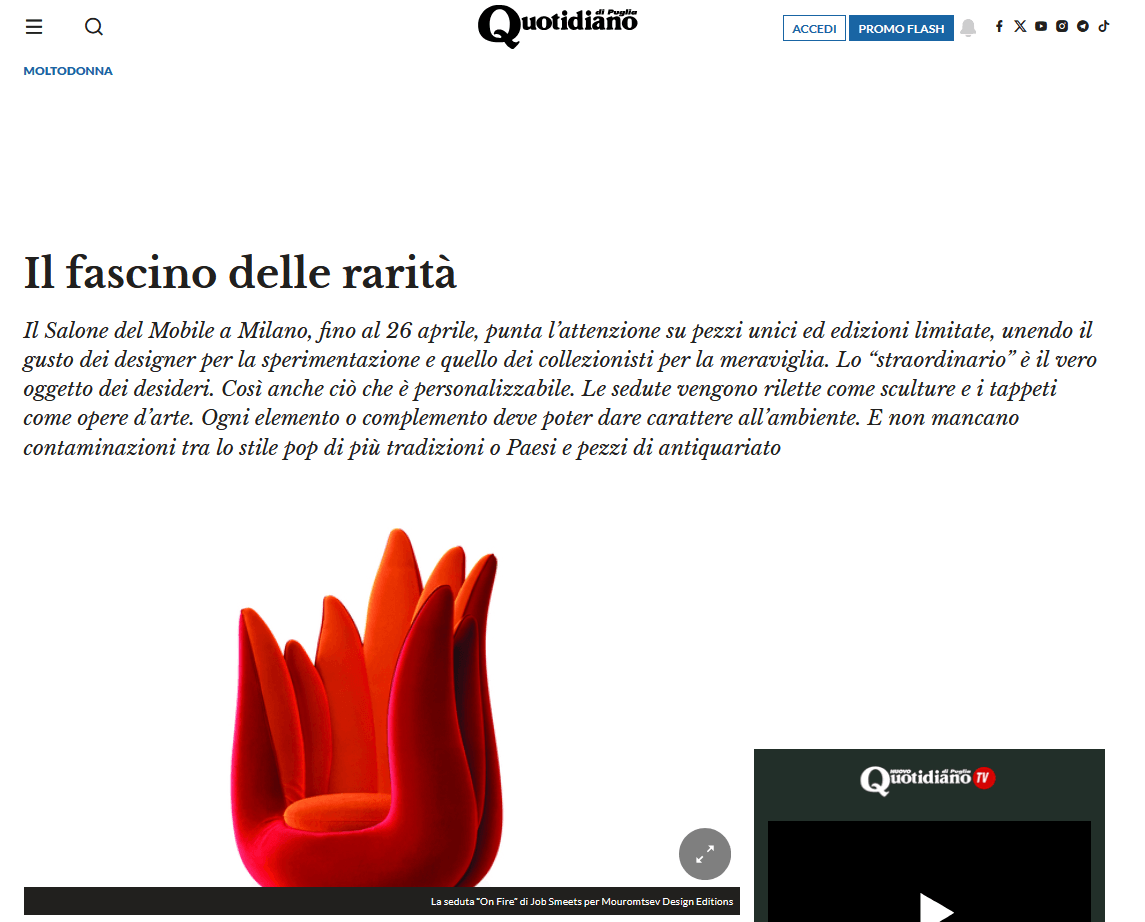
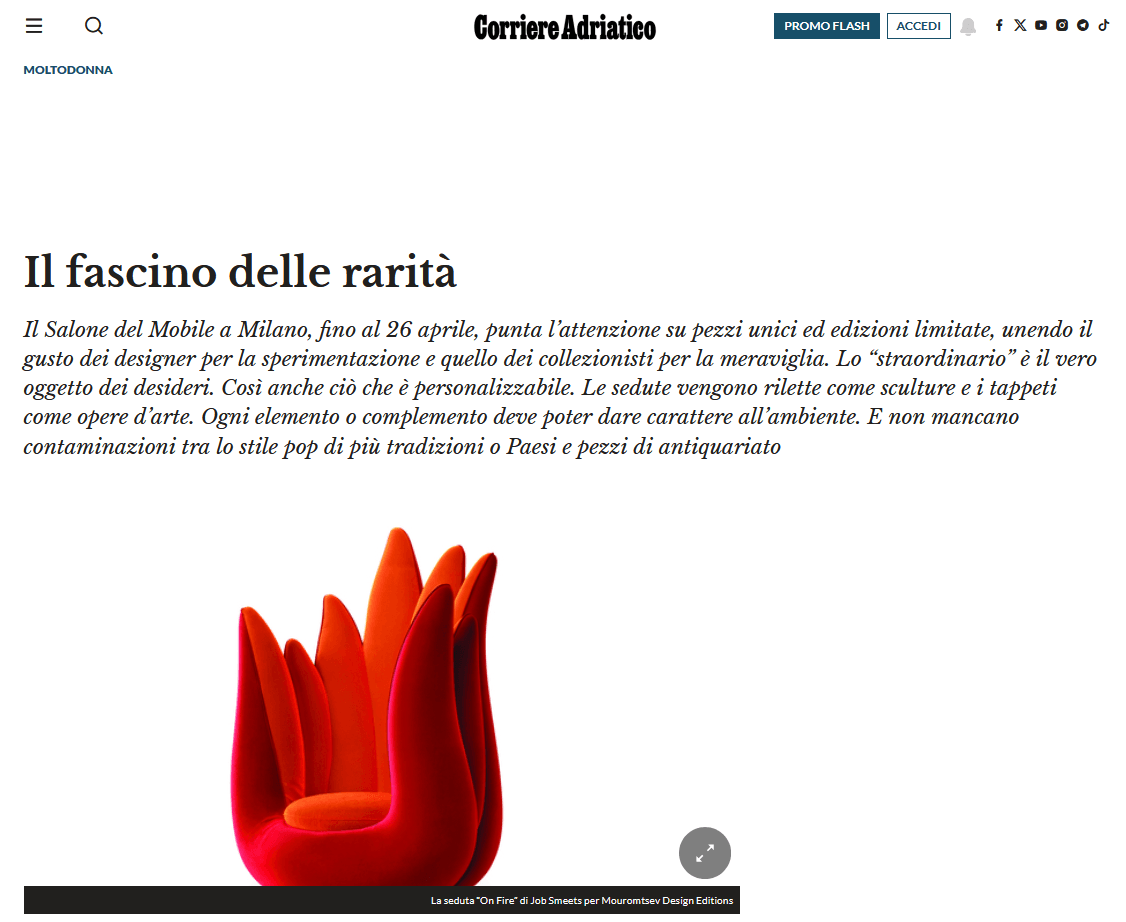
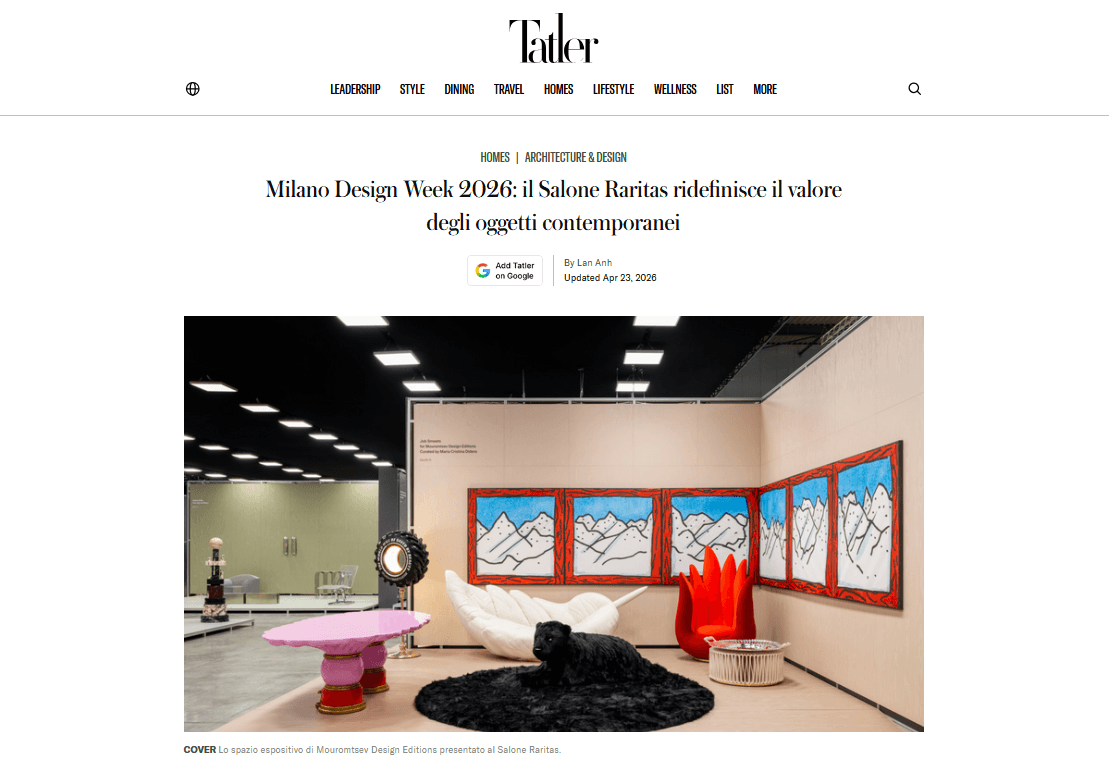
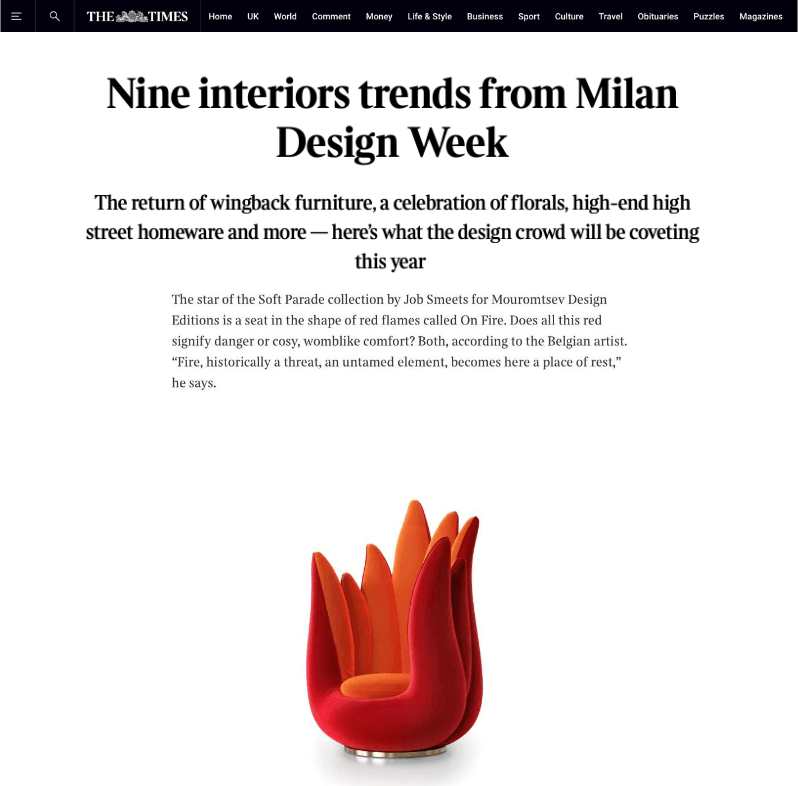
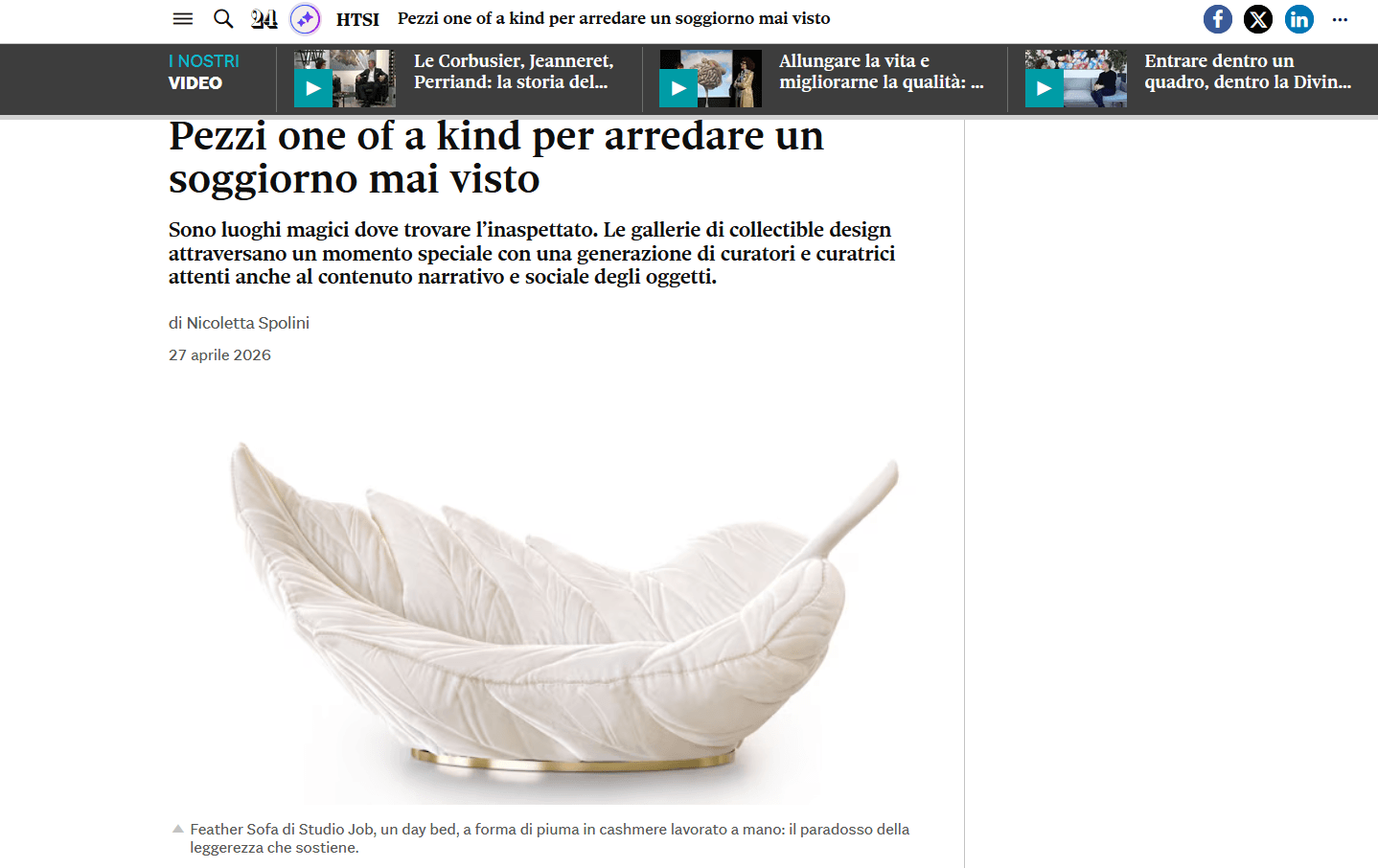
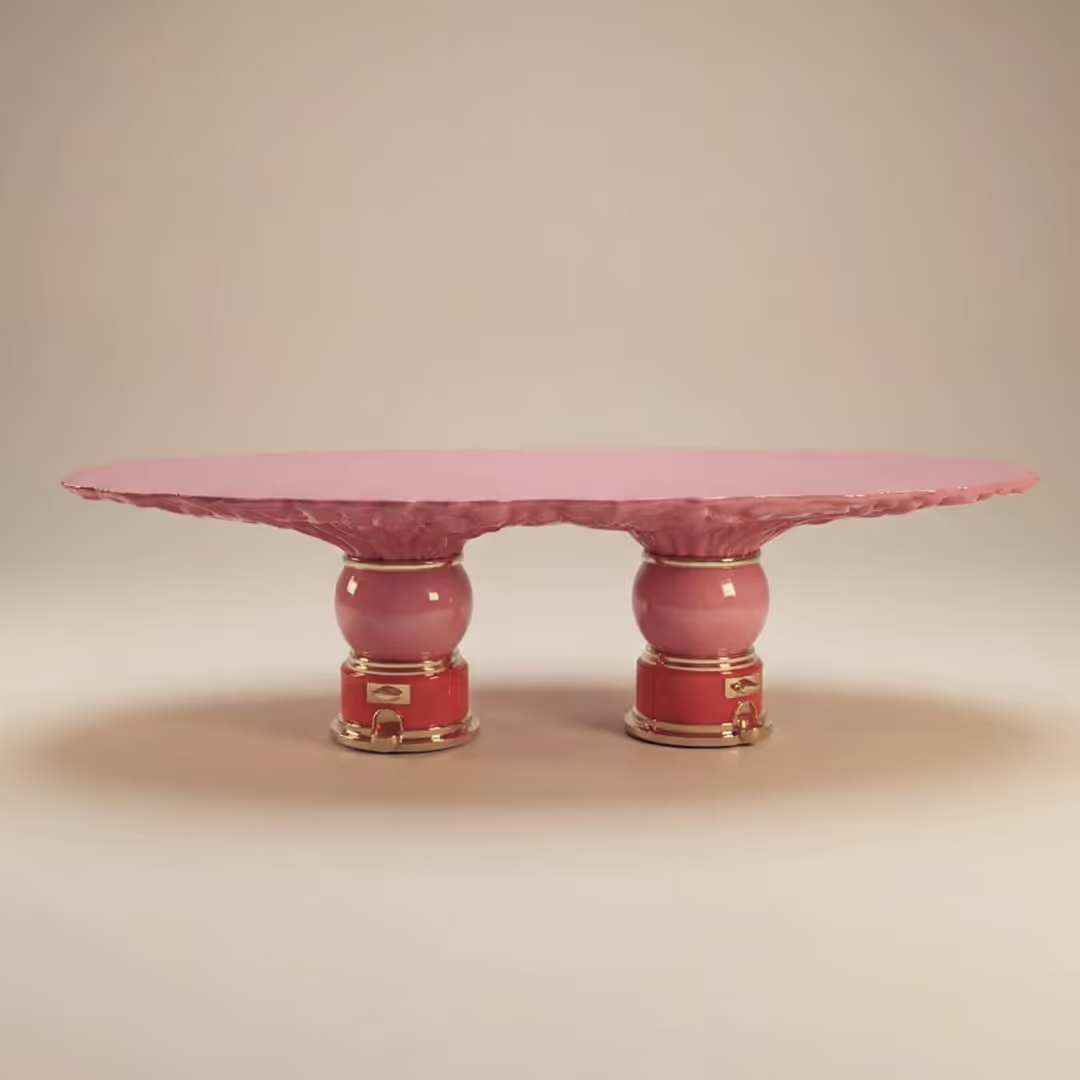
The collection comprises six typologies of objects, each represented by a singular piece: Daybed, Carpet, Floor Lamp, Table, Coffee Table, and Lounge Chair.
Each piece develops its own position through a precise relationship between form, material, and concept. Together, they form a cohesive yet varied reflection on softness (+ irony) as a critical and contemporary condition.
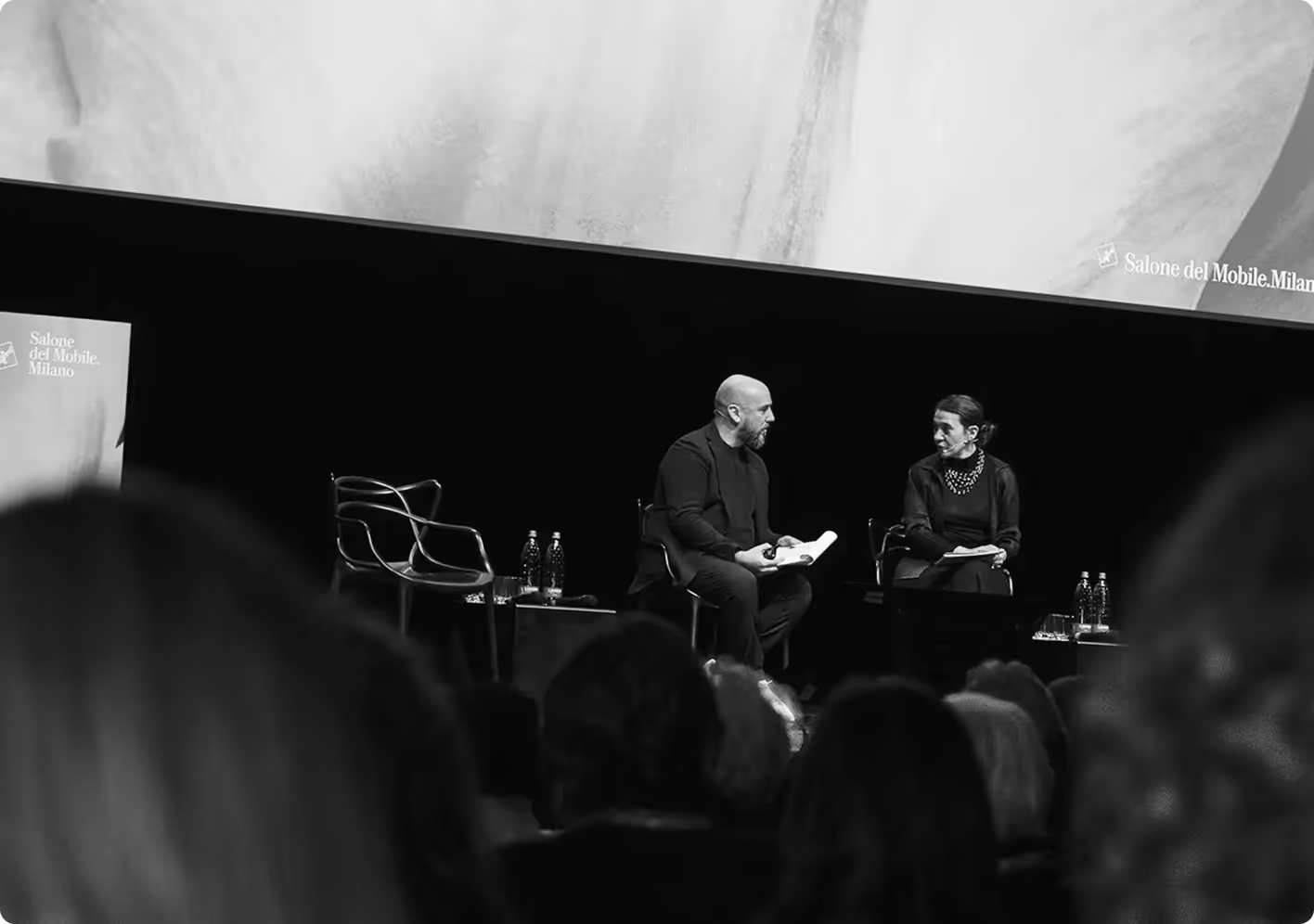
Maria Cristina Didero is an independent design curator, consultant and author based in Milan. She has collaborated with leading international institutions, brands and publications, including Design Miami/, Vitra Design Museum, Wallpaper, Domus, Molteni&C, Fritz Hansen, Loro Piana and Salone del Mobile. Her curatorial practice explores the intersection of contemporary design, craftsmanship and culture.

works
.avif)
.jpg)
%20(1).avif)
.avif)
.avif)

artists

Press